
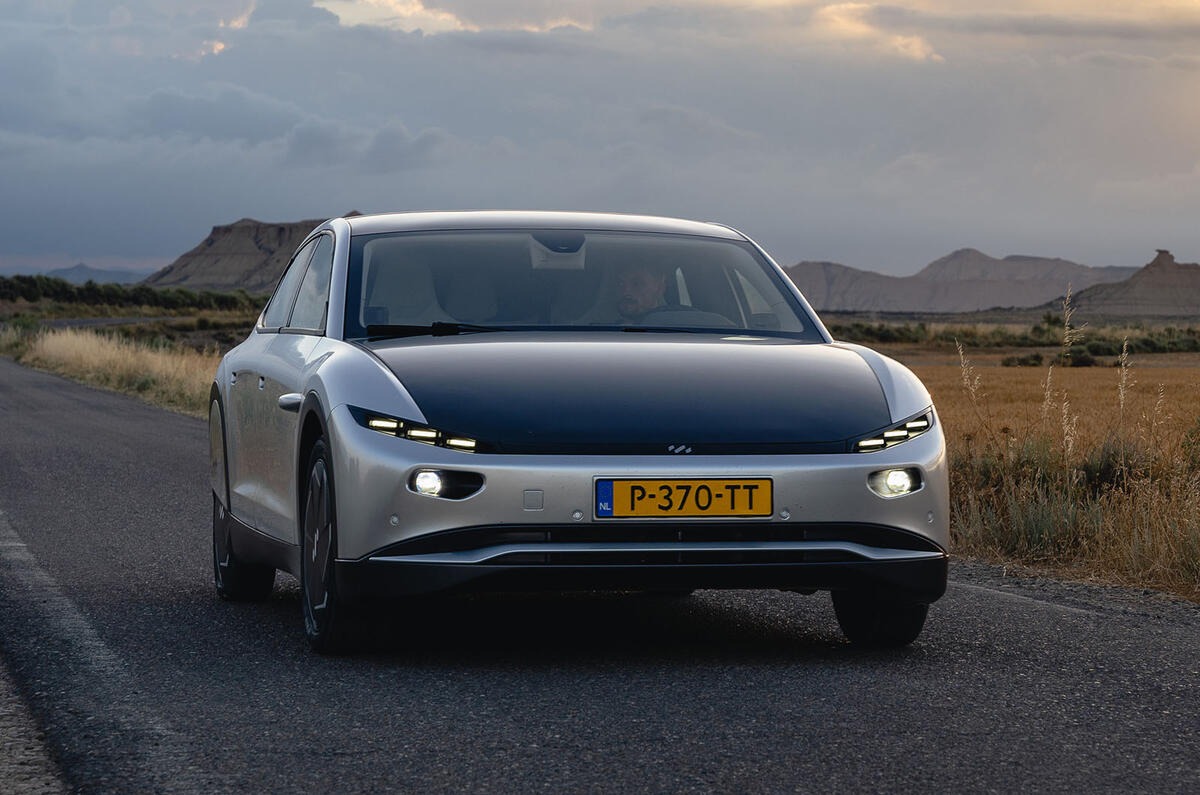
A solar car sounds like a promise pulled from a garage poster, until the numbers start behaving like real engineering. That is why Lightyear Zero range talk still matters to American EV shoppers, even though the car never became a normal U.S. showroom choice. The official car was branded Lightyear 0, but plenty of drivers search for it as Lightyear Zero because the story is easier to remember than the badge.
The honest answer is sharper than the hype. Lightyear did not prove that solar panels can replace charging for every driver. It proved that an ultra-efficient EV can stretch a modest battery farther than most people expected, then add sunlight as a daily range helper rather than a miracle fuel. For readers who follow clean mobility coverage, that distinction matters because it separates useful technology from fantasy.
American drivers should read the results through U.S. habits: 70 mph interstates, hot cabins in Arizona, cold mornings in Michigan, and homes where the car may sit outside for hours. Under that lens, the Lightyear 0 story becomes less about a failed luxury solar car and more about the next fight in EV design: using less energy before asking for a bigger battery.
What the Lightyear Zero Range Numbers Actually Proved
The first mistake is treating every published number as if it came from the same kind of test. Lightyear’s range story had layers: a prototype endurance run, a European lab-cycle estimate, a production-intent highway figure, and a solar gain claim tied to weather and parking. Those numbers can all be useful, but they do not answer the same question for a driver leaving Phoenix, Denver, or Boston.
What solar EV testing proved before production
The early headline came from the Lightyear One prototype, which covered more than 710 kilometers on a single battery charge at 85 km/h at the Aldenhoven Testing Center in Germany. The same test reported energy use of only 85 Wh/km, with a 60 kWh battery involved in the run. That is an efficiency result first and a range headline second.
The best solar EV testing asks a plain question: how much road can you get from each unit of stored energy? Lightyear’s answer was impressive because the car was not carrying a giant pack to force a big number. It was squeezing distance from low drag, reduced rolling losses, careful thermal control, and in-wheel motor design.
American shoppers should pause here. A steady 53 mph track run does not feel like I-95, I-10, or I-80 on a windy day. Yet the test still mattered because it showed the platform’s ceiling under controlled motion, which gave later production figures a technical backbone instead of marketing air.
Why the 60 kWh battery changed the conversation
Most long-range EV talk in the U.S. leans on bigger packs. That path works, but it brings weight, cost, mining demand, and slower efficiency gains. Lightyear took the opposite bet: keep the battery near 60 kWh and make the car spend energy like a careful accountant.
That choice made the reported 625 km WLTP range stand out. A 388-mile European-cycle figure from that battery size is not normal behavior for a large fastback EV, even if WLTP is not the same as an EPA label. InsideEVs reported the 625 km WLTP figure and the claim of up to 70 km of extra range per day from the solar bodywork under ideal conditions.
The counterintuitive lesson is that solar was not the main trick. The main trick was needing less power to move the car. Lightyear 0 solar panels mattered more because the car was so frugal; the same solar surface on a wasteful SUV would feel like pouring a cup of water into a swimming pool.
Why WLTP, Highway Range, and U.S. Driving Do Not Match Cleanly
The gap between European numbers and American driving is where many EV arguments go bad. A WLTP figure can help compare one vehicle with another, but it does not promise that a U.S. driver will see the same distance on a fast interstate route. Lightyear’s claims deserve respect, but they also need translation.
How WLTP range differs from what an American driver expects
The Lightyear 0’s 625 km figure came from the European WLTP framework, not a U.S. EPA label. That matters because American window-sticker range uses EPA procedures and adjustments that are meant to better reflect city and highway use, climate loads, and driving behavior. EPA explains that adjusted city and highway EV range values are weighted together to create the combined label result.
The WLTP range should be read as a standardized benchmark, not a personal guarantee. A driver in San Diego doing calm suburban miles may see results that flatter the car. A driver crossing West Texas at 75 mph into a headwind would punish the same vehicle in ways no friendly brochure can soften.
A useful mental conversion is not a fixed percentage. It is a habit check. Speed, tire pressure, temperature, cargo, elevation, rain, and cabin heat all take their bite. Lightyear’s efficiency gave it more room to absorb those losses, but physics still collects payment.
Why the highway range matters more than the big headline
Lightyear also promoted a 560 km figure at 110 km/h, without extra solar contribution. The Driven published the same range and charging specification set, including 625 km battery range, 560 km at 110 km/h, up to 70 km additional daily solar range, and a 60 kWh battery pack.
That highway range is the number many U.S. readers should care about first. It sits closer to real road-trip behavior than a mixed-cycle lab estimate, though 110 km/h is about 68 mph, while many American interstates flow faster. Raise speed, and aerodynamic drag rises hard.
The surprise is that Lightyear’s lower-speed prototype result was not the most practical brag. The production-intent highway claim told a more useful story: even away from perfect track conditions, the design still looked unusually efficient. That is the kind of number an EV owner can plan around.
What Solar Charging Really Adds in Daily American Use
Solar charging is easy to oversell because sunlight feels free. It is free at the point of use, yes, but a car is not a rooftop array pointed at the sun all day. It parks in shade, moves through clouds, heats up in traffic, collects dirt, and spends part of its life in garages. That does not make onboard solar pointless. It makes the benefit local.
Where Lightyear 0 solar panels would help most
Lightyear claimed its body-integrated cells could add up to 70 km per day in ideal conditions, and some reports described annual solar yield claims up to 11,000 km depending on climate. Those claims fit southern European assumptions better than a blanket U.S. promise, but the same logic points toward sunny American regions.
Lightyear 0 solar panels would make the most sense for a driver who parks outside in open sun, drives modest daily distances, and hates plugging in for short trips. Think a commuter in Tucson with a 24-mile round trip, not a Chicago apartment dweller parking under a train line.
Shade changes everything. So does snow. A clean, exposed car in Las Vegas can collect energy while you work. A car tucked in a garage in Minneapolis collects nothing until it leaves. Solar range is less like a gas tank and more like loose change dropping into your account during the day.
Why sunny states still need plug-in charging
A solar-assisted EV still needs a charging plan. Long trips, bad weather, night driving, and heavy climate use can erase the romance fast. The best version of this technology reduces charging frequency; it does not remove charging from your life.
EPA’s own EV range guidance makes one point impossible to ignore: real-world highway driving can differ from lab results after adjustments for aggressive driving and HVAC use. That warning applies even more when a car asks sunlight to help carry part of the daily load.
The quiet win is not “never plug in.” The win is fewer small charges, less grid demand for short commutes, and less battery capacity needed for the same daily confidence. For many American households, that could matter more than a giant peak range number.
Why the Car Failed While the Engineering Still Matters
Lightyear 0 did not become the future sitting in American driveways. It was expensive, limited, and short-lived. That failure matters because engineering can be smart while the business case collapses. Mature EV buyers should be able to hold both truths without turning the story into either worship or mockery.
Why the production story ended so quickly
The Lightyear 0 carried a luxury price far beyond mainstream EV buyers. Car and Driver reported that the startup halted production, with its operating company Atlas Technologies BV entering bankruptcy soon after, and noted the car’s starting price around $260,000 with a 388-mile range claim.
Valmet Automotive, the Finnish contract manufacturer, also announced in January 2023 that production of the Lightyear 0 ended at the Uusikaupunki plant after Lightyear chose to suspend the model and focus on the Lightyear 2.
That business ending does not erase the test data. It does expose the brutal cost of trying to build a new car company around exotic efficiency, low-volume production, and a price tag that only a thin slice of buyers could consider. In the U.S., even wealthy EV buyers often choose support networks, service access, and resale confidence over a rare technical statement.
What future EV makers should learn from the results
The smartest lesson for automakers is not “cover every car with panels tomorrow.” It is “stop wasting energy first.” Better tires, cleaner aero, lighter structures, smarter heat systems, and lower accessory loads can give every EV a longer leash before solar enters the picture.
Lightyear’s later direction points that way. The company now describes itself around solar charging systems for electric vehicles rather than selling complete luxury cars, and in January 2026 it announced work with Nissan on vehicle-integrated solar charging technology for a demonstration vehicle.
That pivot may prove more useful for Americans than the original car. A solar roof package on future fleet vehicles, delivery vans, commuter EVs, or outdoor work vehicles could spread the benefit without asking buyers to gamble on a rare $260,000 sedan. Sometimes the failed product is less valuable than the parts it leaves behind.
Conclusion
The lesson here is not that sunlight will rescue every EV owner from charging stops. That story sounds nice, but it bends under real roads, real weather, and real American driving speed. The smarter takeaway is that efficiency is still the most underrated form of range.
The smartest way to read Lightyear Zero range is to see it as proof of direction, not proof of mass-market arrival. A 60 kWh battery pushed that far shows what can happen when a car is designed around energy discipline instead of brute force. The solar layer then becomes a bonus that works best for the right driver, in the right climate, with the right parking habits.
American buyers should ask tougher questions after this story. How efficient is the EV at highway speed? How much range does it lose in winter? How often will it sit in full sun? How strong is the service network behind it?
Use those questions before buying any solar-assisted EV or long-range electric car. The future belongs to vehicles that waste less before they promise more.
Frequently Asked Questions
What were the Lightyear 0 real world range testing results?
The strongest public results were a 710 km prototype run at 85 km/h, a 625 km WLTP estimate, and a 560 km highway figure at 110 km/h. Each number came from different test conditions, so they should not be treated as one identical promise.
Did the Lightyear 0 actually run only on solar power?
No. It was a battery-electric car with integrated solar cells that could add range during sunny parking or driving conditions. The battery still carried the main load, while sunlight helped reduce how often the driver needed plug-in charging.
How far could the Lightyear 0 drive on the highway?
Lightyear promoted a 560 km highway figure at 110 km/h without counting extra solar range. Faster U.S. interstate speeds, strong wind, cold weather, and cabin heating could reduce that number in daily use.
Why was the Lightyear 0 range so high with a small battery?
The car focused on low energy use instead of battery size. Its body shape, low drag, efficient motors, tires, and careful energy management helped stretch a 60 kWh pack farther than many heavier EVs with similar battery capacity.
Would Lightyear 0 solar charging work well in the USA?
It would work best in sunny states where the car parks outside for long periods. Arizona, Nevada, Southern California, and parts of Texas would make more sense than shaded urban parking or snowy winter regions.
Was the Lightyear 0 sold in the United States?
No normal U.S. retail launch happened. The car was aimed mainly at European markets, and production ended soon after it began. American readers mostly know it through test results, media coverage, and its influence on solar EV design.
Why did Lightyear stop making the Lightyear 0?
The car was expensive to build, carried a high purchase price, and arrived during a hard funding period for EV startups. Production stopped in early 2023, and the operating company tied to vehicle production entered bankruptcy.
What can future solar EVs learn from Lightyear 0 testing?
Future solar EVs should copy the efficiency mindset before copying the panels. Lower energy use makes every battery, charger, and solar cell more useful. The real win is not sunlight alone; it is designing cars that need less power from the start.